
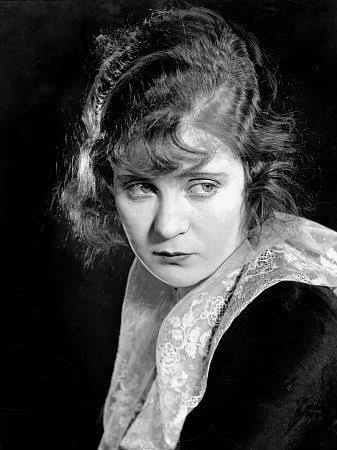
A trailblazing actress whose talent and naturalistic style captured the hearts of audiences during the golden age of silent cinema.
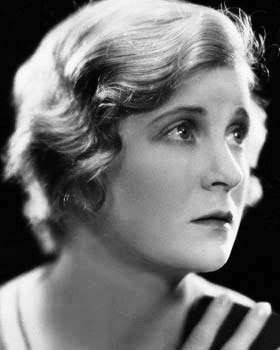
Mae Marsh (1895-1968) was an American actress who achieved great success during the silent film era. She began her career as a child actor in the early 1900s, and by the time she was a teenager, she had become one of the most popular stars in Hollywood. Marsh appeared in many of director D.W. Griffith’s most famous films, including “The Birth of a Nation” and “Intolerance,” and was known for her naturalistic acting style and ability to convey strong emotions on screen. After the transition to sound films, Marsh continued to work in Hollywood, though she never reached the same level of fame she had enjoyed during the silent era. Despite this, she remained a respected figure in the industry and continued to act in films and television until the end of her life.
And this is what she said about acting and performing 🎭 ⤵️
When I have established the idea of the play I immediately go over the script again with an eye alert for business. By business I mean the tricks, mannerisms, and the apparent unexpected or involuntary moves that help to sustain action.
If in the matter of make-up I can convince my candidate that he or she will be better off by using as little as possible of it. Self-consciousness on the screen is much the same thing as stage fright in the spoken drama and proceeds, I suppose, from the same source, which is the inability to forget one’s self.
When a dear friend of mine first began playing small parts she found that she suffered from it. She also saw that it would certainly be fatal if she didn’t cure it. “For that reason,” she said to herself, “the best thing to do is to think so hard about the part that I am playing that I won’t have time to think of anything else.”
She gave herself good advice. Anyhow it worked and I am sure it will be successful in the case of the average beginner. If so, then camera-conscious-ness will really be a blessing in disguise, for it will have taught the actress concentration upon her part and concentration, in every fiber of one’s being, I believe, is the big secret of screen success. I remember the case of one young actress who came to me in tears saying that when she rehearsed her part in the privacy of her own home, or dressing room, she felt every inch of it, but once under the gaze of the director, the assistant director, the cameraman, possibly the author and perhaps a number of privileged persons about the studio, she seemed to wilt. “Look at it this way,” I advised. “When you are acting the director has his work to do and is doing it. So has the assistant director. Likewise the camera-man and the assistant cameraman have their work to do and are doing it. So are the other actors. As for the lookers-on, request that they leave. Then imagine you are in a big schoolroom where everyone is busy at his or her lessons. You have your lesson to get which is concentrating upon your part.
Go ahead with it.”
Camera-consciousness having been eliminated the beginner can now throw himself or herself entirely into the part being played. By throwing one’s self into the part I do not mean forcing it. Nothing is quite so bad as that. I mean feeling it. If you do not feel the particular action being played then the result will certainly be a lack of sincerity. We have already decided that that is fatal.
when first going before a camera it is well to resolve to put as much into one’s performance as possible. We cannot too greatly concentrate upon our parts. If we do not feel them we can be very sure they will not convince our audiences.
Good screen acting consists of the ability to accurately portray a state of mind.
If a part is under-played or, worse, over-played- for there is nothing so depressing as a screen actress run amuck in a flood of sundry emotions-it exerts a definite influence upon you, the audience.
For those who would like to take up the screen as a career, how ever, such an evening may prove very profitable. For it is the learning what not to do that is important. There never was a character portrayal done upon the screen that could not have been spoiled without this knowledge.
Whenever I study a scenario or story it is with an eye for the contrast of moods and the situations that call for emotional emphasis. I plan in advance of the actual camera work the pace at which I will play various stages in the development of the story. By shutting my eyes I can almost see how the part will look upon the screen. If there is a sufficient contrast of moods and opportunity for emphasis I feel that I shall, at least, be able to do all within my power to make the story a success.
I can suggest no better aid to this undertaking than retiring to one’s dressing room and remaining quiet. Absolute quiet is an excellent thing for the actress during the working day. It gives her a rest from the turmoil of the studio set. It provides her a chance to do a little mental bookkeeping on the part she is playing. I have found it a great help.

 The Film Industry